Facets
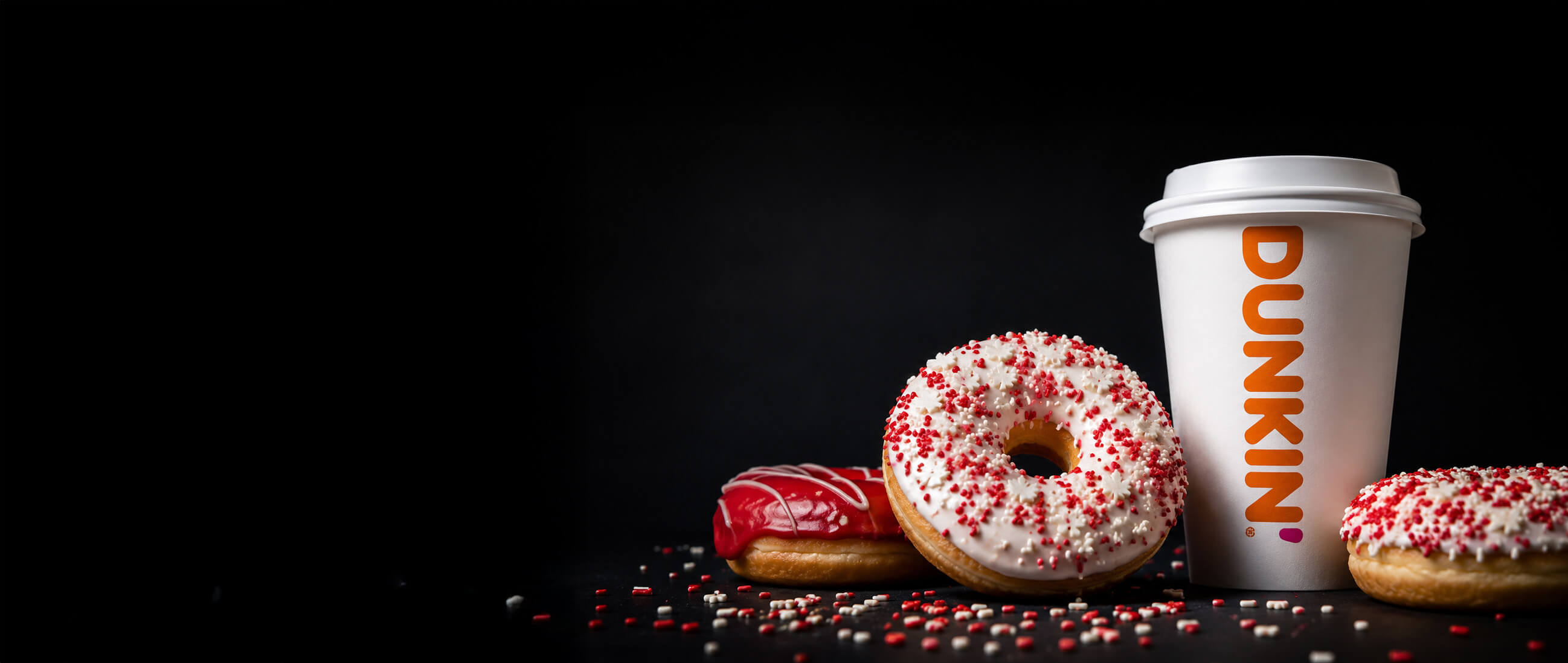
Dunkin is coming (back) to Canada. Dream assignment. Tough brief.
Dunkin is coming back to Canada, with Foodtastic signing a master franchise agreement with Inspire Brands to open hundreds of locations across the country. First stores are expected in late 2026 or early 2027.
This is the sort of challenge that gets us excited for the same reason it should make us nervous: there is no easy win. As an agency, we’d be drawn to it because it has all the ingredients of a great assignment: cultural tension, famous brand, massive incumbent, and a very clear business challenge. But, ‘challenge’ might be an understatement.
To be clear, Dunkin has been in Canada before. In the 90s, it had over 200 locations, but almost all of them in the Quebec market. So to say they are ‘coming back’ mostly applies only to that province. For the most part, this will be their first time in most parts of Canada.
Nor are they entering a market short on coffee, donuts, breakfast sandwiches, drive-thrus, or places to buy the morning wake-me-up and afternoon revive-me ritual that have become mainstays of Canadian life. Nope, Canada’s got that covered, more specifically, Tim Hortons does.
So let’s call the assignment what it is. Going head-to-head with an entrenched market leader. For Dunkin to succeed in Canada, it has to win visits directly from Tim Hortons. Not just ‘sort of’. Not theoretically. Not in a “there’s room in the market” kind of way. Store by store, market by market, daypart by daypart, it has to literally steal occasions that are currently going mostly to Tim’s. There’s no sugar-coating on that donut.
This will be a steep mountain to climb. A quick-service coffee shop will not survive on novelty. It needs repeat visits, daily traffic, fast throughput, and a high enough average cheque to make rent, royalties, food costs, and franchise economics work. Depending on the location and cost structure, coffee shop benchmarks suggest a store may need roughly 75–200 customers a day just to break even, and more than that to become meaningfully profitable. In other words, curiosity is not a business model. Habit is.
This is the sort of challenge that gets us excited for the same reason it should make us nervous: there is no easy win. As an agency, we’d be drawn to it because it has all the ingredients of a great assignment: cultural tension, famous brand, massive incumbent, and a very clear business challenge. But, ‘challenge’ might be an understatement.
To be clear, Dunkin has been in Canada before. In the 90s, it had over 200 locations, but almost all of them in the Quebec market. So to say they are ‘coming back’ mostly applies only to that province. For the most part, this will be their first time in most parts of Canada.
Nor are they entering a market short on coffee, donuts, breakfast sandwiches, drive-thrus, or places to buy the morning wake-me-up and afternoon revive-me ritual that have become mainstays of Canadian life. Nope, Canada’s got that covered, more specifically, Tim Hortons does.
So let’s call the assignment what it is. Going head-to-head with an entrenched market leader. For Dunkin to succeed in Canada, it has to win visits directly from Tim Hortons. Not just ‘sort of’. Not theoretically. Not in a “there’s room in the market” kind of way. Store by store, market by market, daypart by daypart, it has to literally steal occasions that are currently going mostly to Tim’s. There’s no sugar-coating on that donut.
This will be a steep mountain to climb. A quick-service coffee shop will not survive on novelty. It needs repeat visits, daily traffic, fast throughput, and a high enough average cheque to make rent, royalties, food costs, and franchise economics work. Depending on the location and cost structure, coffee shop benchmarks suggest a store may need roughly 75–200 customers a day just to break even, and more than that to become meaningfully profitable. In other words, curiosity is not a business model. Habit is.
And Tim Hortons owns the habit in Canada.
There is a tempting argument that Tim’s has softened. And it had. Angus Reid found back in 2018 that while 70% of Canadians still said Tim Hortons played a role in Canadian culture, and 62% still patronized the chain regularly, one in three said their opinion of the company had worsened in recent years. That is not nothing. It shows a real erosion in the emotional glow around the brand.
But in no way does this brand ‘softness’ show a real weakness.
Tim Hortons has an extraordinary cultural and physical advantage. Ipsos put Tim Hortons back in the Top 10 Most Influential Brands in Canada in its 2025 study, crediting, among other things, the brand’s Canadian identity resonating in a year when patriotism and “True North” values have mattered so much.
Tim’s is a formidable foe. Possibly a slight fraction less loved than it once was, but it is still deeply known and deeply embedded in Canadian life and culture. The same people who might complain about it still show up day after day. Even if they think the coffee cup got thinner or the apple fritter got smaller - the product is still right. It fits. It’s familiar and familiar is comforting.
The Iced Capp and 10-pack of Tim-Bits is not just an order; it is muscle memory.
There’s no inviting little category gap for Dunkin to enter. It is battling a memory system.
Then, layer on the bigger cultural headwind: Dunkin is iconically American at a moment when American-ness is more complicated in Canada than it has been since 1812 or the Nixon’s hostile tarrif era. Ipsos has reported that roughly six in ten Canadians are either buying more Canadian products or avoiding American products, services, investments or travel because of the state of Canada-U.S. relations. Among those changing behaviour, 82% said they would continue buying Canadian even after the immediate crisis passed, while 57% said they would continue avoiding American products and services.
But, that also doesn’t mean Canadians are suddenly immune to American culture. Obviously not. We are soaked in it. We watch it, wear it, stream it, scroll it, eat it and order it. But it does mean Dunkin cannot assume automatic or immediate permission from Canadian consumers.
Age, however, does matter. Ipsos has noted that Gen Z Canadians are more likely to put price/value ahead of country of origin, while Boomers pay closer attention to where products come from. Leger research has found that politically influenced reduction of U.S. goods skews older: 78% among those 55+, 68% among those 35–54, and 56% among those 34 and younger. Still, that’s over half of those under 34 who are actively reducing purchases of obvious American products.
However this may be Dunkin’s opening.
Not broad national love.
Rather, cultural desire among the people most willing to separate American politics from American culture.
Younger consumers. Students. Gen Z workers. Social-first beverage people. Suburban teens. Younger millennials with kids. The content-creator set. People for whom an iced drink is not just a drink, but a mood, a post, a break in the day - even a slice of identity.
This is where Dunkin has something to study from its U.S. playbook. The Charli D’Amelio (An OG TikTok influencer with a massive following) partnership worked because it went well beyond a traditional endorsement pasted onto a menu. It turned a genuine creator behaviour into an orderable product. “The Charli” reportedly helped drive a 57% spike in Dunkin app downloads and significant cold brew sales lifts.
That is a strategic cue: Dunkin Canada needs to import Dunkin’s cultural behaviour and then make it native here.
The inroad is probably not the dutiful morning coffee run, at least not at first. Tim’s owns too much of that. The better entry point may be the afternoon iced drink, the study break, the TikTok order, the creator collab, the after-school stop, the office “who wants something?” run, the treat that feels more social than functional.
Tim Hortons owns default behaviour, especially among older Canadians.
Dunkin has to make itself desirable as the deviation from the norm.
Yes, Dunkin is American. But it will need to make that somehow work on its behalf. By bringing a brand energy that Tim Hortons could never own. Louder. Sweeter. Colder. More social. More playful. More creator-led. More willing to be a little or a lot silly..
Not Tactics. That is the strategy.
Because if Dunkin is going to win here, it has to do more than open locations. It has to make enough Canadians, often enough, choose it over the place they were already going.
Honestly, that is a tough challenge.
But also a fascinating one.
Because this is not a soft branding exercise. This is capital S Strategy with traffic counts, trade areas, embedded taste-memory, TikTok culture, franchise economics, patriotism, and a national incumbent sitting on almost every good corner in the country.
Dunkin is coming (back) to Canada.
It will not be enough to make people notice.
The very tough job would be to change fundamental beliefs, memory-systems, and behaviours. Now that’s a task any agency would both love and loathe.

Let’s talk.
The best way to get to know us—and how we work with clients—is by reaching out.